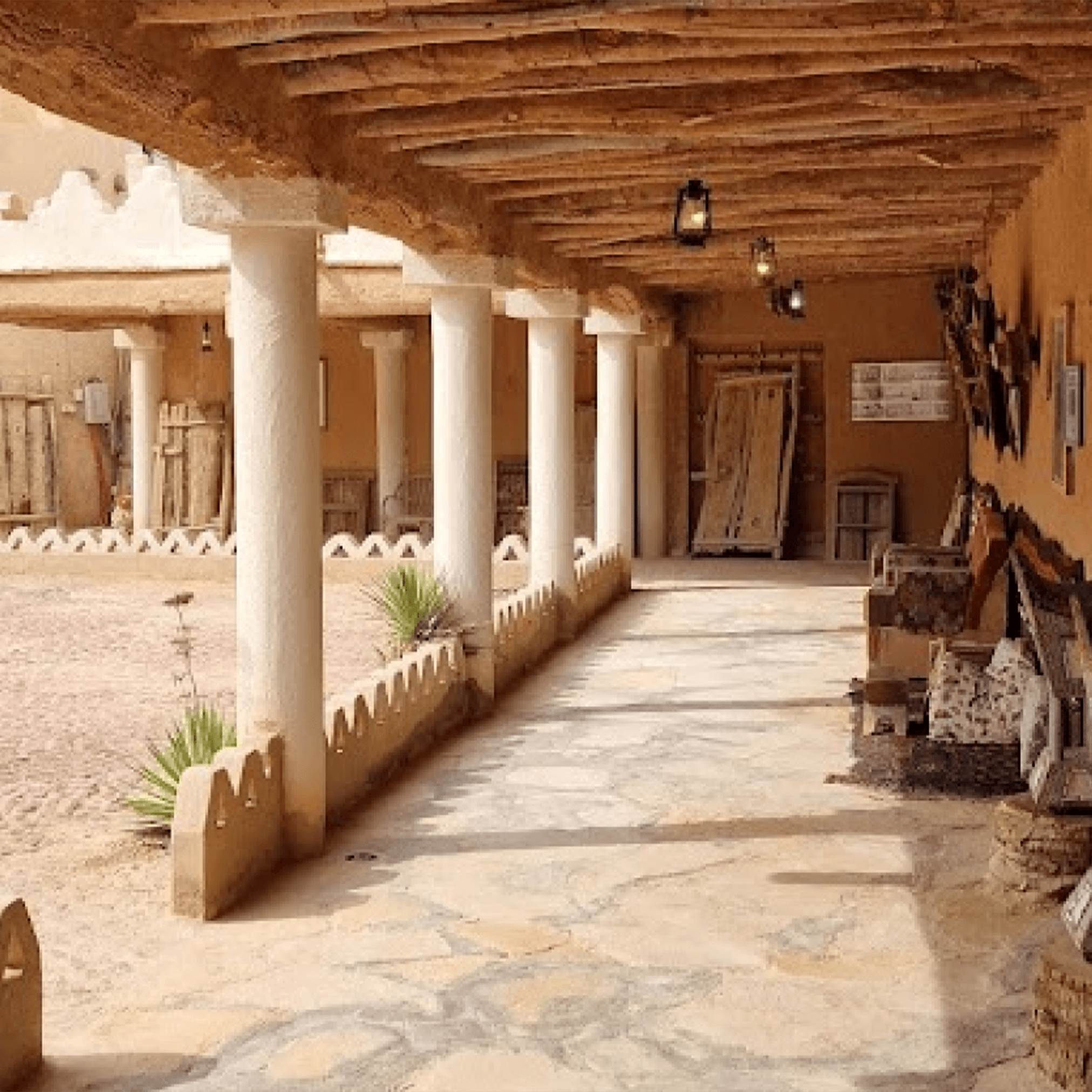
It is located in the city of Jubbah and was built by its prince Atiq bin Muslim bin Farhan in 1171/1758 AD. The palace was constructed of mud and included a sitting place (Majlis) with an area of about sixty square meters. There is an old well in the palace that was drilled before the palace was built. The palace’s rooms are now used to display some artifacts, a number of agricultural products, the products of some of the region’s handicrafts, in addition to thousands of ancient artifacts that reflect several historical stages that went through the region, which are located next to the desert. The artifacts include coffee tools, some old clothes, jewelry, and women’s toiletries, as well as sewing tools, leather goods such as sabags and Nataa(leather rugs), and many copper tools, such as coffee pots, Sahal, and Safari for storing drinking water. It also includes a collection of weapons and war tools.